Every parent knows that bittersweet moment when you realize those tiny onesies don't fit anymore. Whether you're saving clothes for a future sibling or preserving special pieces as keepsakes, knowing how to store baby clothes properly makes all the difference. Let's walk through everything you need to keep those precious little garments in perfect condition.
Before You Store: Essential Preparation Steps
The secret to successful baby clothes storage? Thorough preparation. Start by sorting through your little one's wardrobe and creating clear categories by size. This helps you identify which items to store immediately and which to keep in rotation as your baby grows.
Set aside pieces that hold special sentimental value—coming-home outfits, first holiday ensembles, milestone celebration wear. These deserve extra care and attention in storage.
Clean Everything Thoroughly
Proper cleaning is absolutely crucial for long-term storage. Launder all items according to their care labels, using gentle detergent without harsh fragrances or fabric softeners (these can actually deteriorate fabric over time).
Pay special attention to protein-based stains from milk or food—these can yellow over time if not properly treated before storage. Once cleaned, make sure each piece is completely dry. Even a little moisture can lead to mold and mildew growth.
Assess Quality Before Packing
Before packing away clothes, conduct a quality check. Examine each garment for damage like loose threads, missing buttons, or weak seams that could worsen during storage. Remove any items with irreparable damage or stubborn stains.
For precious pieces requiring special care, consider professional cleaning to ensure proper preservation. This careful preparation ensures that when you retrieve your stored items—whether for your next child or as cherished keepsakes—they'll be in the best possible condition.
Organize by Size, Season, and Type
Creating an effective organization system saves you time and stress down the road. Here's how to do it:
Group by Age Milestones
First, organize clothing by age ranges: newborn, 0-3 months, 3-6 months, and so on. This natural progression makes it simple to rotate clothes in and out of storage as your baby grows.
Separate by Season
Within each age group, separate items by season. Store winter coats, warm sleepwear, and heavy fabrics together, while keeping summer essentials like lightweight onesies and sun hats in their own section. This seasonal approach lets you quickly retrieve or store entire wardrobes as weather changes.
Category by Clothing Type
Consider sorting by type as well—jackets together, onesies together, sleepwear together. This makes it much easier to locate specific pieces later without searching through several different boxes.
Special Occasion Wear
Wedding outfits, holiday ensembles, and milestone celebration clothes should be stored separately with extra care. These pieces often carry deep sentimental value and may need specialized storage conditions.
Use Dividers for Tiny Items
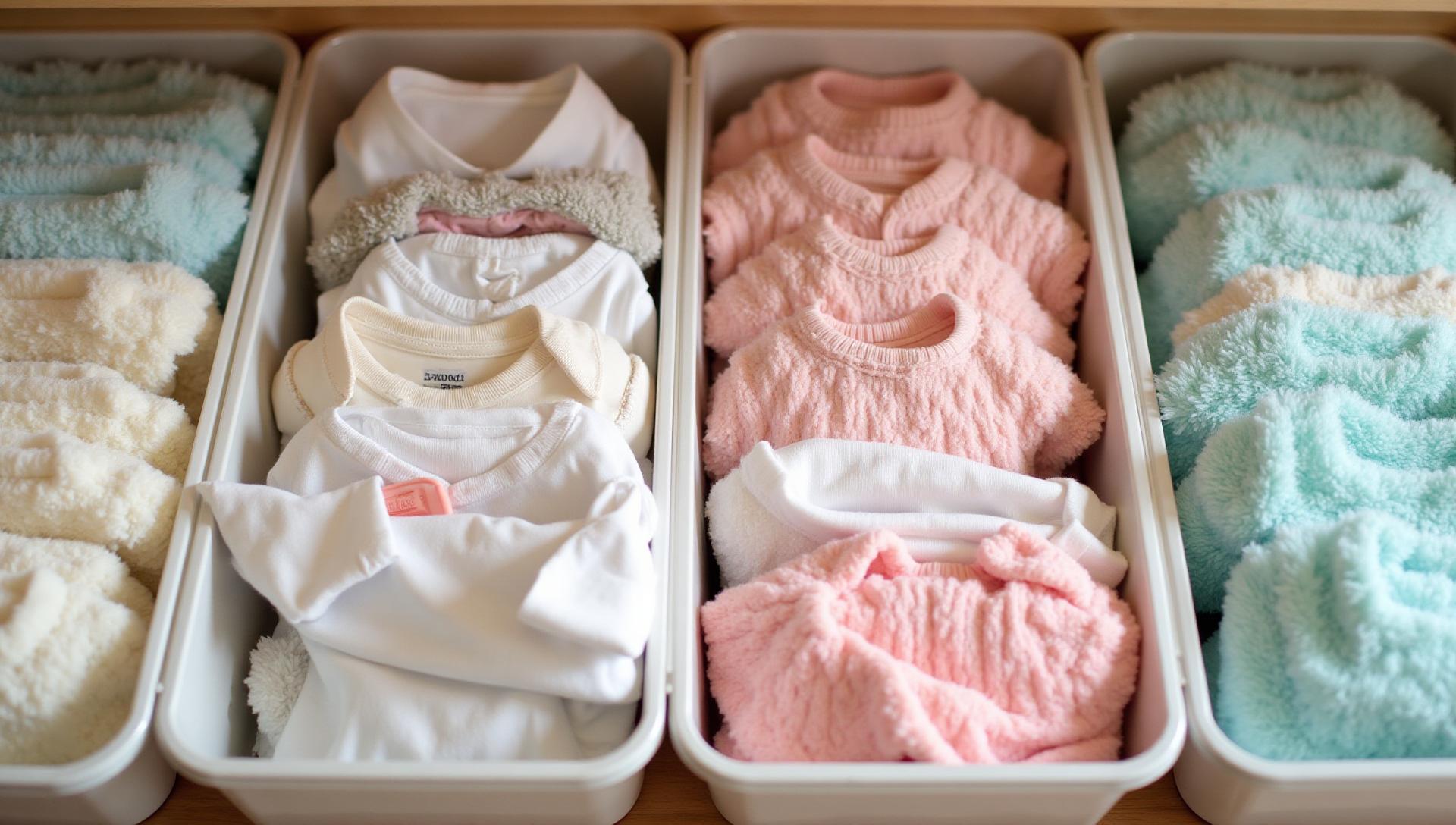
Those adorable tiny hats, socks, and baby mittens are essential, but they can easily get lost in storage. Use dividers or small containers within your storage bins to create designated sections for all these small items.
This simple organization trick transforms chaos into an efficient system, making it a breeze to find exactly what you need when you need it.
Choose the Right Storage Solutions
Short-Term Storage
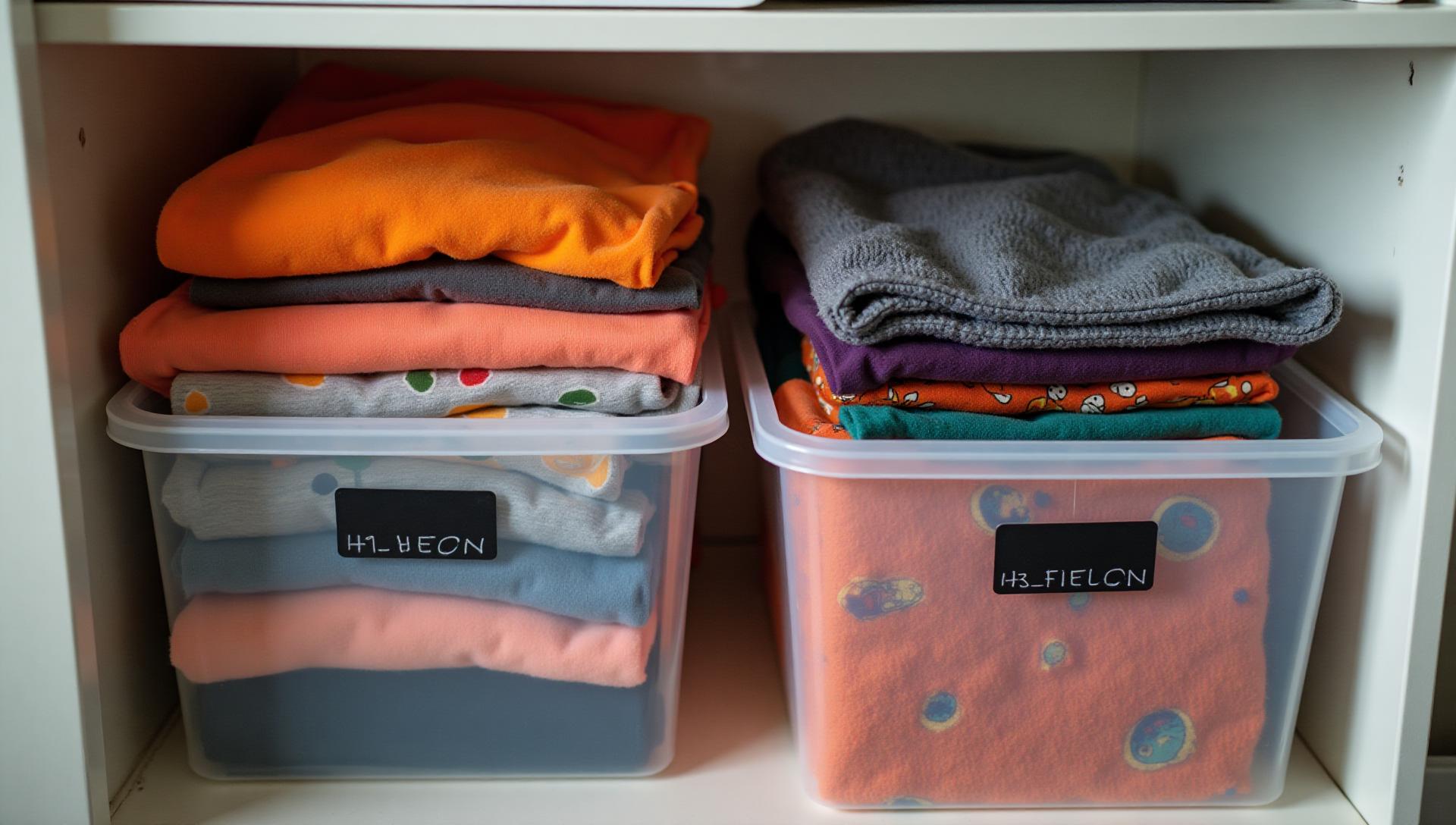
For clothes your baby will grow into soon, use breathable cotton storage bags and clear bins that fit under cribs, changing tables, or in nursery closets. Having the next size range readily available helps you prepare for inevitable growth spurts.
Long-Term Storage
Long-term storage demands more careful preservation methods to protect cherished items meant to be passed down or kept as keepsakes. Climate-controlled environments provide ideal conditions for preserving delicate fabrics, preventing damage from humidity, temperature fluctuations, and harmful light exposure.
Space-Saving Techniques
Roll onesies rather than folding them—this prevents deep creases while conserving space. Vacuum-sealed bags work well for synthetic materials and bulky items like winter coats and blankets, though natural fibers like cotton need some air circulation to stay in good condition.
Create an Accessible Organization System
You've put in the work to organize everything—now make sure you can actually find what you need when you need it. Here's how:
1. Implement Clear Labels
Create standardized labels for each storage bin showing size, season, and category in large, readable text. Your future self will thank you.
2. Build a Master Inventory
Maintain a simple spreadsheet listing all stored items with their bin locations and key details. This might seem like overkill, but it's incredibly helpful when you're trying to remember if you kept that special outfit.
3. Structure Contents Efficiently
Arrange items vertically in bins to maximize visibility and streamline retrieval. When everything is visible at a glance, you won't have to dig through layers to find what you need.
4. Use Digital Tools
Take photos of bin contents and store them in a shared cloud folder for quick reference. This is especially helpful if multiple family members might need to access stored items.
5. Schedule Regular Updates
Review and reorganize your storage quarterly to keep the system current and functional. Babies grow fast, and your storage system should keep up.
Protecting Precious Items
Different fabrics require different care approaches to stay in pristine condition during storage.
Temperature and Humidity Control
Temperature and humidity fluctuations pose significant risks to stored baby clothes, potentially causing fabric deterioration, mold growth, and discoloration. A climate-controlled storage environment maintains optimal conditions that protect delicate materials year-round.
Fabric-Specific Storage
Cotton needs air circulation to prevent moisture buildup. Delicate materials like silk or lace should be wrapped in acid-free tissue paper. Wool items must be cleaned and stored with cedar blocks to deter moths.
Special Garment Preservation
For truly special garments like christening gowns or first holiday outfits, use archival-quality storage materials. Store these items unfolded when possible to prevent permanent creasing, and keep them in dedicated bins away from everyday items.
Why Professional Storage Makes Sense
While you can certainly store baby clothes at home, professional storage offers some real advantages, especially for long-term preservation:
- Climate Control: Consistent temperature and humidity levels protect delicate fabrics from environmental damage, mold, and mildew
- Space Efficiency: Free up valuable closet and nursery space for items you're currently using
- Security: Advanced security systems and restricted access keep your precious items protected
- Convenience: Doorstep pickup and delivery eliminate the hassle of transporting bins
- Organized Access: Request specific bins when needed without having to dig through everything
Preserving Memories for Years to Come
Storing baby clothes properly goes beyond simple organization—it's about preserving precious memories for years to come. With the right preparation, organization system, and storage conditions, you can protect these cherished items from damage while maintaining easy access.
Whether you're saving clothes for a future sibling or creating a collection of keepsakes to treasure forever, taking the time to store them properly ensures those tiny garments will be in perfect condition whenever you need them again.
Ready to Store Your Baby's Precious Clothes?
Juujbox provides climate-controlled storage that's perfect for preserving delicate baby clothes and keepsakes. We bring storage bins to you, pick them up when packed, and store them securely until you need them again.
Get Started Today